

The Basingstoke Canal first opened in 1794, creating an important waterway between Hampshire and Surrey.
Since then, it has played an important role in the area's history, originally transporting agricultural goods and other cargo between central Hampshire and London via the River Wey Navigation.
Stretching for around 32 miles, the canal passes through beautiful countryside and historic areas including Greywell, Odiham, Aldershot and Woking.
Being based in Surrey here at Gorse Hill, it's a fascinating local landmark to have on our doorstep and one that's well worth exploring.
Read on to discover more about the history of the canal and how this historic waterway has changed over the years.
When Did The Basingstoke Canal Open?
Date: The Basingstoke Canal officially opened in 1794.
The idea for the canal dates back to 1776, with an Act of Parliament passed in 1778 allowing construction to go ahead.
Work eventually began in 1788 under canal engineer John Pinkerton, with the route designed to connect Basingstoke with the River Wey Navigation in Surrey.
Construction took several years, partly because of the challenging terrain and the need to build locks and the Greywell Tunnel.
The canal finally opened in 1794, creating a navigable route between Hampshire and the River Thames.
What To Expect At The Basingstoke Canal
Whether you're walking along the towpath, exploring by boat or enjoying a peaceful afternoon beside the waterway, the Basingstoke Canal brings together history, nature and the local countryside.
As a visitor, you can expect:
Exploring around 32 miles of historic waterway through Hampshire and Surrey.
Discovering 29 locks along the route.
Walking or cycling along sections of the towpath.
Passing through countryside, woodland and local villages.
Exploring historic areas around Odiham, Greywell, Aldershot and Woking.
Following the route towards the River Wey Navigation and its junction with the River Thames.
Visiting the Canal Visitor Centre at Mytchett.
Enjoying activities such as boating and canoeing.
The History Of The Basingstoke Canal
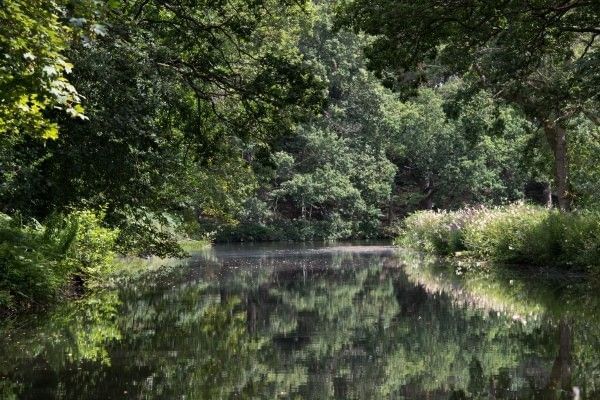
Image of the Basingstoke Canal featured in our article on the history of the Basingstoke Canal
The history of the canal begins in the 18th century when there was growing interest in creating a navigation between Basingstoke and London.
The original canal company was given permission to build the waterway through an Act of Parliament in 1778.
However, construction was delayed during the American War of Independence as raising the necessary money proved difficult.
Eventually, work began in 1788 and the canal opened in 1794.
The waterway was mainly designed to carry agricultural goods, although other cargo such as timber was also transported along the canal.
The route included 29 locks and the Greywell Tunnel, which allowed the canal to pass through the chalk hills near Greywell.
Over time, however, canal traffic declined as the railway became a faster and more efficient way of transporting goods.
The Southampton Railway in the 1830s increased competition, while the canal company itself experienced financial difficulties.
The canal company went into liquidation in 1866, and the waterway changed ownership several times.
Local developments, including the growth of Aldershot, helped to keep the canal in use for longer, but by the early 20th century its future was increasingly uncertain.
In 1923, the canal was bought by A.J. Harmsworth, who helped keep some commercial traffic operating along the route.
However, the Greywell Tunnel partially collapsed in 1932, cutting off the western end of the canal.
By the middle of the 20th century, much of the waterway had fallen into poor condition.
Restoring The Basingstoke Canal
A few key moments in the canal's restoration:
Canal Society: Volunteers played an important role in campaigning for the canal to be saved and restored.
County councils: Hampshire County Council became a co owner of the canal in 1973, followed by Surrey County Council in 1976.
Restoration work: The project involved repairing the canal, restoring its 29 locks and improving the water supply.
Reopening: After years of restoration, the canal finally reopened in 1991.
The restoration helped preserve the historic waterway for future generations and allowed people to enjoy the canal once again.
Today, the Basingstoke Canal Authority works alongside the county councils and other organisations to manage and maintain the canal.
FAQs related to the Basingstoke Canal
How long is the Basingstoke Canal?
The Basingstoke Canal is around 32 miles long, running from the River Wey Navigation in Surrey towards Greywell in Hampshire.
Where does the Basingstoke Canal start and finish?
The Basingstoke Canal starts at its junction with the River Wey Navigation at Woodham in Surrey and runs for around 32 miles towards Greywell in Hampshire.
The canal originally continued through the Greywell Tunnel towards Basingstoke, but the tunnel was closed following its collapse in 1932.
When did the Basingstoke Canal open?
The Basingstoke Canal opened in 1794 after construction began in 1788.
Why was the Basingstoke Canal built?
The canal was built to provide a navigable route for transporting agricultural goods from Hampshire towards London via the River Wey Navigation and River Thames.
How many locks are there on the Basingstoke Canal?
There are 29 locks along the Basingstoke Canal, helping boats navigate changes in elevation along the waterway.
What happened to the Greywell Tunnel?
The Greywell Tunnel partially collapsed in 1932.
The tunnel is now an important habitat for bats and is not open to the public.
When was the Basingstoke Canal restored?
Major restoration work took place from the 1970s onwards, with the restored canal finally reopening in 1991.
Can you walk along the Basingstoke Canal?
Yes, sections of the towpath are accessible to walkers and provide a peaceful way to explore the historic waterway and surrounding countryside.
Where is the Basingstoke Canal Visitor Centre?
The Canal Visitor Centre is located in Mytchett, Surrey, and provides an opportunity to learn more about the canal and enjoy activities on the waterway.